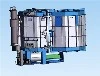
For manufacturers of hot coiled springs, heat treatment is an important part of the production process. After hot winding, springs need suitable heat treatment to achieve the required mechanical properties and maintain consistent product quality.
However, selecting heat treatment equipment is not simply a matter of choosing a furnace with the right temperature range. Spring dimensions, production capacity, process requirements, handling methods, and factory layout all influence the equipment configuration.
For manufacturers planning a new production line or upgrading existing facilities, understanding these factors can help avoid unsuitable investments and improve production efficiency.
1. Understand Your Spring Products Before Selecting Equipment
The first step is to identify the range of springs that the equipment needs to process.
Different hot coiled springs may vary considerably in:
Wire diameter and material specifications
Spring outer diameter and free height
Spring weight and overall dimensions
Required production output
Heat treatment requirements
These differences affect how springs are loaded, heated, transferred, quenched, and tempered.
For example, a factory producing several spring sizes in small batches may need more flexible equipment arrangements. A manufacturer producing a limited range of products in large quantities may place greater emphasis on continuous operation and automated material handling.
Before selecting equipment, manufacturers should prepare product drawings, technical requirements, and estimated daily or hourly output.
2. Consider the Main Heat Treatment Equipment
Heat treatment equipment for hot coiled springs generally needs to support the required heating, quenching, and tempering operations. The actual configuration depends on the spring material and the customer's production process.
Heating Equipment
Heating equipment brings springs to the required process temperature before the next operation.
When evaluating a heating furnace, manufacturers should consider:
Whether the effective heating space matches the spring dimensions
Whether the temperature can be controlled consistently
Whether the heating arrangement suits the required production output
Whether loading and unloading can be integrated with the production line
Whether the furnace is suitable for the planned operating schedule
A furnace should be selected according to the actual production requirements rather than temperature specifications alone.

Quenching Equipment
Quenching is a key stage in hot coiled spring heat treatment. After heating, springs are transferred to the quenching system according to the specified process.
When selecting quenching equipment, manufacturers should pay attention to:
The transfer method between heating and quenching
The arrangement of the quenching station
Compatibility with spring dimensions and product handling
Process stability and repeatability
Coordination with upstream and downstream equipment
The quenching arrangement should be evaluated together with the heating process. The two stages need to work as a coordinated system.

Tempering Equipment
After quenching, springs generally require tempering according to their material and technical requirements.
Tempering equipment should be selected based on the required temperature, processing time, loading method, and production capacity.
Manufacturers should also consider whether the tempering furnace can operate independently or needs to be integrated into an automated production line.
The objective is to establish a stable process that can accommodate the factory's product range and production schedule.

3. Match Equipment Capacity with Actual Production Requirements
Equipment capacity is one of the most important factors in investment planning.
A production line may contain suitable individual machines but still fail to achieve the expected output if the equipment is not properly matched.
For example, if the heating furnace processes springs faster than the quenching station can handle them, products may accumulate between operations. Similarly, insufficient tempering capacity can create a bottleneck after quenching.
Manufacturers should therefore evaluate the capacity of the complete process rather than considering each machine separately.
Important factors include:
Expected hourly and daily output
Spring dimensions and average product weight
Heating and processing cycle times
Loading and unloading efficiency
Transfer and handling time
Planned working hours and production shifts
A well-matched equipment configuration helps reduce unnecessary waiting time and supports more consistent production flow.
4. Choose Between Individual Machines and an Integrated Production Line
Not every manufacturer needs a fully automated heat treatment line. The right solution depends on current production conditions and future development plans.
Individual equipment configuration
Purchasing individual machines may be suitable for factories with existing production equipment, limited investment budgets, or changing product requirements.
This approach allows manufacturers to upgrade specific operations without replacing the entire production system.
However, equipment connections and material handling need to be considered carefully to avoid creating additional manual work or production bottlenecks.
Integrated heat treatment production line
For manufacturers planning higher output or a more coordinated production process, an integrated line may be a better option.
Depending on the process, the configuration can connect heating, quenching, tempering, and material transfer operations.
Automation can help reduce manual handling, improve production coordination, and make the process easier to manage.
The decision should be based on product requirements, expected output, available factory space, labor arrangements, and investment plans.
5. What Should You Check Before Purchasing?
Before placing an order, manufacturers should provide suppliers with sufficient technical information.
A practical equipment evaluation should cover:
Product drawings: Dimensions, material specifications, weight, and product range.
Production targets: Expected hourly or daily output and working schedule.
Process requirements: Heating, quenching, and tempering requirements.
Equipment configuration: Individual machines or an integrated production line.
Factory conditions: Available space, utilities, material flow, and installation conditions.
Future expansion: Whether the equipment can accommodate additional product types or increased output.
It is also important to clarify the scope of supply, control system requirements, installation arrangements, commissioning, and after-sales support.
Comparing suppliers only by equipment price may overlook important differences in configuration and production suitability.
6. Customized Heat Treatment Solutions for Hot Coiled Spring Manufacturers
Different spring manufacturers have different production requirements. A standard equipment configuration may not be suitable for every factory.
JIMENG develops heat treatment equipment and production line solutions according to customer product specifications, process requirements, and production targets.
Depending on the project, the supply scope can include equipment for material cutting, heating, hot coiling, quenching, and tempering.
Customers can choose individual machines or discuss a more integrated production line based on their existing facilities and investment plans.
By evaluating product drawings, expected output, and factory conditions before equipment selection, manufacturers can establish a configuration that better matches their actual production needs.
Conclusion
Choosing heat treatment equipment for hot coiled springs requires more than comparing furnace models or technical specifications. Manufacturers need to consider the complete process, product range, production capacity, equipment coordination, and future development plans.
A properly planned configuration can help improve production flow, reduce unnecessary handling, and support stable manufacturing.
Before making an investment, it is worth discussing your spring specifications and production targets with an equipment manufacturer to determine a suitable solution.