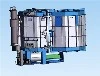
In most cases, it is the result of several process variables working together, including heating temperature, quenching conditions, material quality, and tempering parameters. Understanding these factors is the first step toward improving production consistency.
Why Does Cracking Occur During Leaf Spring Heat Treatment?
During leaf spring heat treatment, the steel undergoes significant structural changes. After austenitizing, the workpiece is rapidly cooled during quenching to obtain the required hardness. At this stage, the internal stress increases sharply.
If the stress exceeds the material's strength, cracks may appear either immediately after quenching or during subsequent handling.
For manufacturers, preventing leaf spring cracking is essential because even a small crack can significantly reduce fatigue life and lead to product failure in service.
Common Causes of Leaf Spring Cracking
1. Excessive Heating Temperature
If the heating temperature is too high, the grain structure becomes coarse. This reduces toughness and increases the risk of cracking during leaf spring heat treatment.
Modern walking beam furnaces help maintain uniform furnace temperatures, reducing overheating and improving process stability.
2. Improper Quenching Process
The leaf spring quenching stage requires careful control of cooling speed and quenching medium.
Cooling that is too rapid may generate excessive internal stress, while insufficient cooling may prevent the material from achieving the required hardness.
A properly designed quenching system helps maintain consistent cooling conditions throughout the production process.
3. Inadequate Tempering
Tempering is essential after quenching.
Without proper tempering, the material remains hard but brittle, making it more susceptible to cracking during transportation, assembly, or fatigue loading.
A continuous tempering furnace provides stable temperature control and helps relieve internal stress while maintaining the required mechanical properties.
4. Material Quality
The chemical composition and cleanliness of spring steel also influence cracking resistance.
Surface defects, inclusions, or improper raw material selection may increase the possibility of crack initiation during leaf spring heat treatment.
How Modern Heat Treatment Equipment Helps Prevent Cracking
Today's manufacturers focus not only on achieving hardness but also on maintaining process consistency.
A modern leaf spring heat treatment line typically combines:
Walking beam furnace for uniform heating
Automatic transfer system
Controlled quenching equipment
Continuous tempering furnace
Intelligent temperature monitoring
These systems help reduce process variation and improve product reliability.
Rather than relying on operator experience alone, manufacturers can achieve more stable production through automated process control.
Quality Control Is Equally Important
Even with advanced equipment, regular quality inspection remains essential.
Manufacturers commonly monitor:
Furnace temperature uniformity
Heating time
Quenching medium condition
Tempering temperature
Hardness distribution
Surface crack inspection
By combining stable equipment with effective quality control, manufacturers can significantly reduce the occurrence of leaf spring cracking.
Future Trends in Leaf Spring Heat Treatment
As the commercial vehicle industry continues to demand longer service life and higher reliability, heat treatment technology is evolving toward greater automation and precision.
Manufacturers are increasingly adopting intelligent control systems, real-time temperature monitoring, and energy-efficient furnace designs to improve product consistency while reducing operating costs.
For companies planning to upgrade their production facilities, investing in a modern leaf spring heat treatment line is becoming an important step toward improving competitiveness.
Conclusion
Cracking after heat treatment is one of the most common quality challenges in leaf spring heat treatment, but it can be effectively reduced through proper process control and suitable equipment.
By combining a stable walking beam furnace, a reliable leaf spring quenching system, and a continuous tempering furnace, manufacturers can improve product consistency, reduce production losses, and achieve better long-term performance.